
A good office space can not only boost employee satisfaction and productivity but will also reflect a business’s brand, values and culture to guests. However, creating such a space isn’t always straightforward and there are numerous factors to consider, from the number of employees to the spacing between the furniture.
Safe to say, it can be a challenge to design an office that showcases the brand while still paying due consideration to these factors. In this blog, we’re going to guide you through how to design a functional space that meets all of the legal UK office layout requirements and provide tips on creating a productive, inclusive workspace.
Why does a good office layout matter?
Other than promoting employee productivity and increasing workflow by providing a comfortable workspace – there are also certain laws and regulations you must follow when designing a workspace. These regulations are important for protecting employee well-being as well as offering accessibility to both workers and guests, making a good office layout essential for any business.
The legal health and safety requirements for an office
Before anything else, one of the most important factors that needs to be considered is the health and safety regulations for an office. This includes thinking about the path to exist and entrances as well as keeping clear routes to first aid kits and more. UK regulations state that all offices need to adhere to the following rules:
- All entrances and exits must be clearly marked
- All entrances and exits must be wide enough to fit two people at a time comfortably (usually this is around 36 inches).
- Fire extinguishers and first aid kits must be easily accessible for emergencies.
- All cords and wires must be tucked away to avoid potential trip hazards.
- There must be adequate lighting, with all office areas well-lit and visible.
What are the space requirements for employees?
Employees are at the heart and soul of any business, and ensuring their comfort will keep both staff and the business running efficiently. Everything from how easy it will be to reach the papers they need, to putting away files and having enough space to stretch their arms and legs – it all accounts for a happy workplace. Below, you can find all of the requirements for employees in an office space to help you create an effective working area.
How much space should be between office desks?
According to the British Standard (BS5588) fire regulations, the legal space requirement between office desks is 60 cm (or 5 square metres). There should also be 90 cm of space between desks for wheelchair users as well. However, many offices tend to go over this figure for practical reasons, so it may be closer to 100 cm between desks.
Back-to-back desks, however, tend to have a much bigger space between them to leave a comfortable walkway. The minimum distance for back-to-back office desks is usually 200 cm from the edges of the desk.
Consider seating and movement for the employees
Seating and movement are very important for employee comfort. There should be enough space between seats for people to comfortably push their chairs back or move about freely without knocking into others. The size of the workstation should also be taken into consideration for this as the chair should allow them to sit at their desk comfortably without feeling cramped in the station.
For larger offices, the aisle width should be considered with desk chairs in mind. There should be enough room between chairs so that two people can simultaneously pass through the aisles so as to not disrupt the workspace.
However, it’s not just the space itself that needs to be considered but the chairs. As many employees will be sitting at their desks for many hours a day, it’s crucial to ensure the chairs they have are both supportive and comfortable. Some of the things to consider when buying office chairs include:
- Is the chair comfortable for the intended period of use?
- Is the lower back adequately supported?
- Is the upholstery sufficiently supportive and comfortable?
- Does the chair have adequate types and ranges of adjustment?
- Are the armrests suitable for the workstation and do they allow the user to bring the chair forward enough?
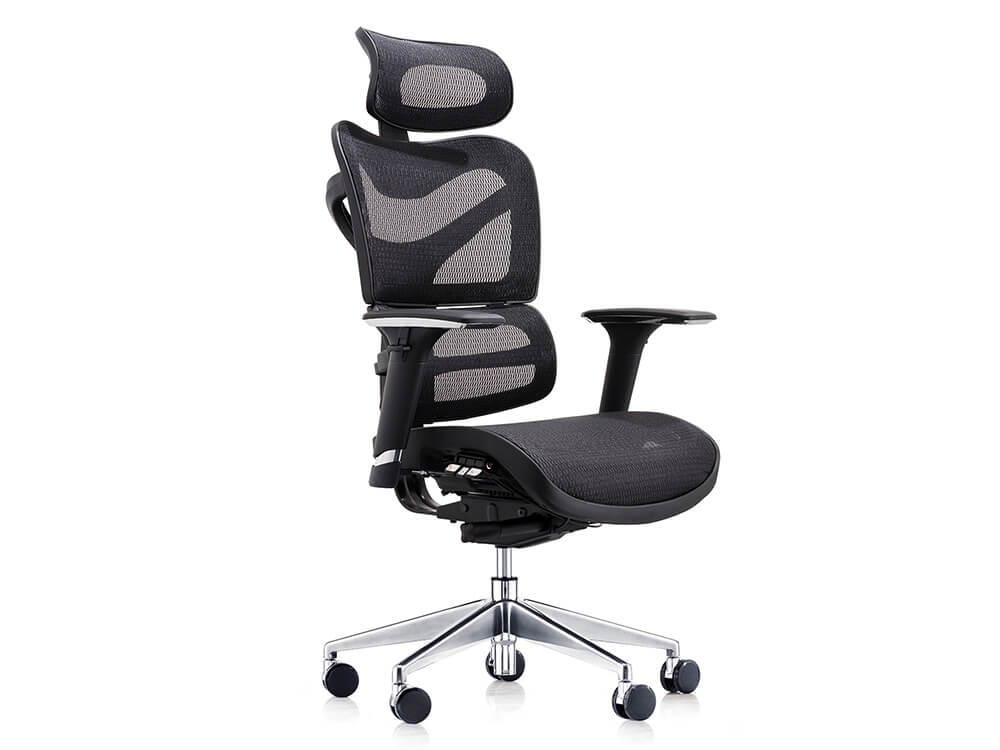
An example of an ergonomic office desk chair that meets all these requirements is the Black executive mesh chair. With everything from an ergonomic design that supports the lower back, comfortable materials and adequate adjustments to suit a range of employee needs, these chairs are the perfect example of a good office desk chair.
Consider improving privacy for employees
You may also want to incorporate partitions and dividing screens between individual workstations, especially if privacy is a priority for your business and employees. This may be good to think about if the employees handle sensitive data, or block out noise from surrounding coworkers if they are answering phones.
Cubicles and partitions are a great way of dividing up a workspace and soundproofing each station as a way to reduce noise, avoid distractions and add an extra layer of privacy.
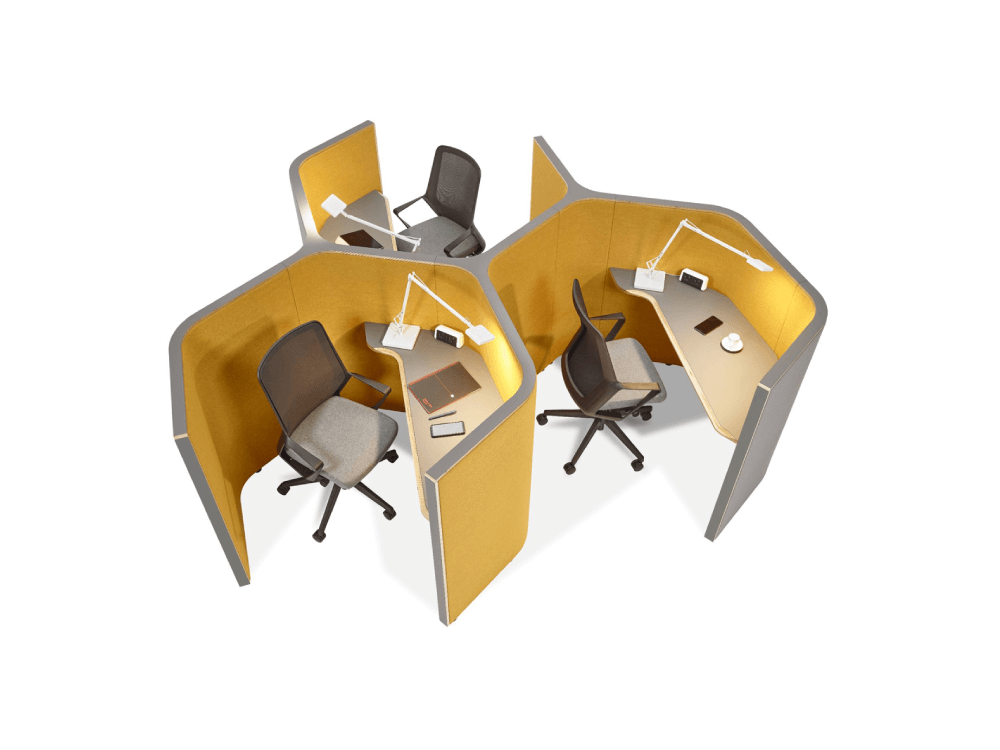
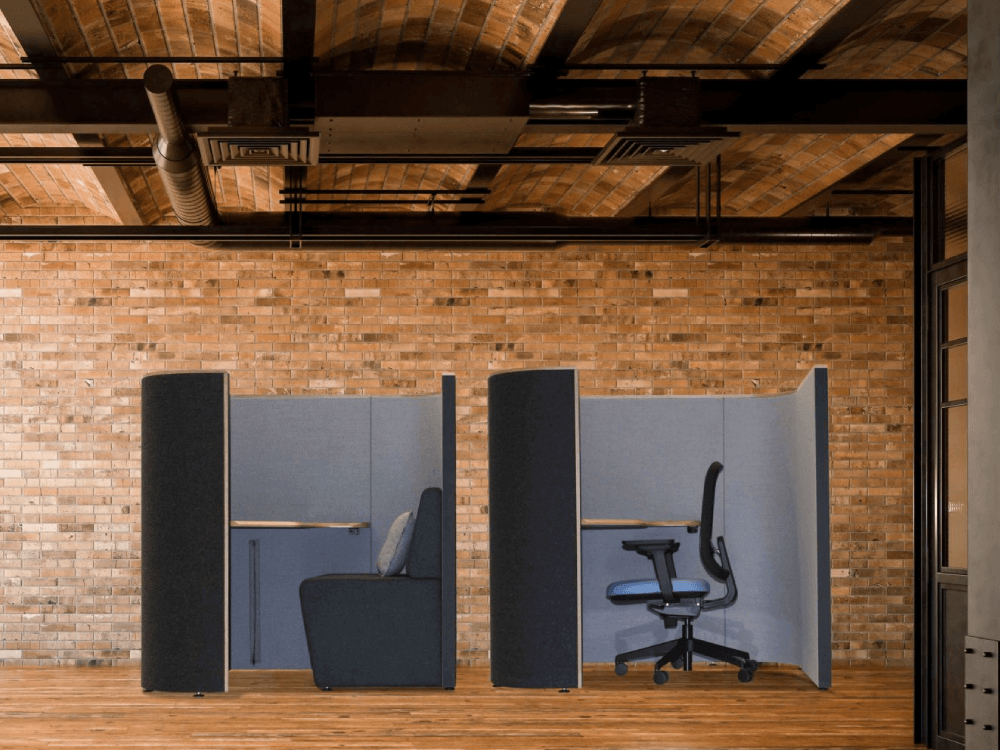
There are a wide variety of ways to include partitions in a workplace. We recommend workpods as they’re a great way to minimise distractions and sound while still offering a comfortable working area for employees. Take this hexagonal-shaped work pod as an example, which is perfect for sitting 3 workers comfortably while maximising the use of an office space. Or, if you prefer something a little more soundproof with spaces in between each pod, then this acoustic surround solo work pod is perfect for creating a little more quiet in busy areas and is a great choice for workers who spend a lot of time on the phone or in online meetings.
Pay attention to guest spacing and seating
Of course, it’s not just the employees to think about when creating a carefully laid-out workplace. You will need to ensure that guests have sufficient space where they can relax to help them feel more welcome.
You’ll need to think about how many guests usually visit the business to know how much space you’ll require for a comfortable seating area, as well as a few other factors such as:
- The size of the chairs or sofas.
- The space between the chairs or sofas.
- How long guests may be expected to wait.
Often, the space between the chairs or sofas are around 60 cm, as this allows enough space for guests to move around and walk between the seating comfortably. This is particularly important if visiting clients or customers may need to spend longer waiting, as the more comfortable their experience is the better.
Organise your meeting room areas and spacing
Important for both employee and guest comfort, depending on usage, meeting rooms are one of the biggest factors when designing an office space layout. For this, you will need to calculate the typical amount of people that would need to be accommodated in a meeting room at any given time to know how much space you will need.
A typical meeting room should be large enough to hold a large table with a number of chairs, and some additional furniture such as a TV and storage cabinets if they’re needed.
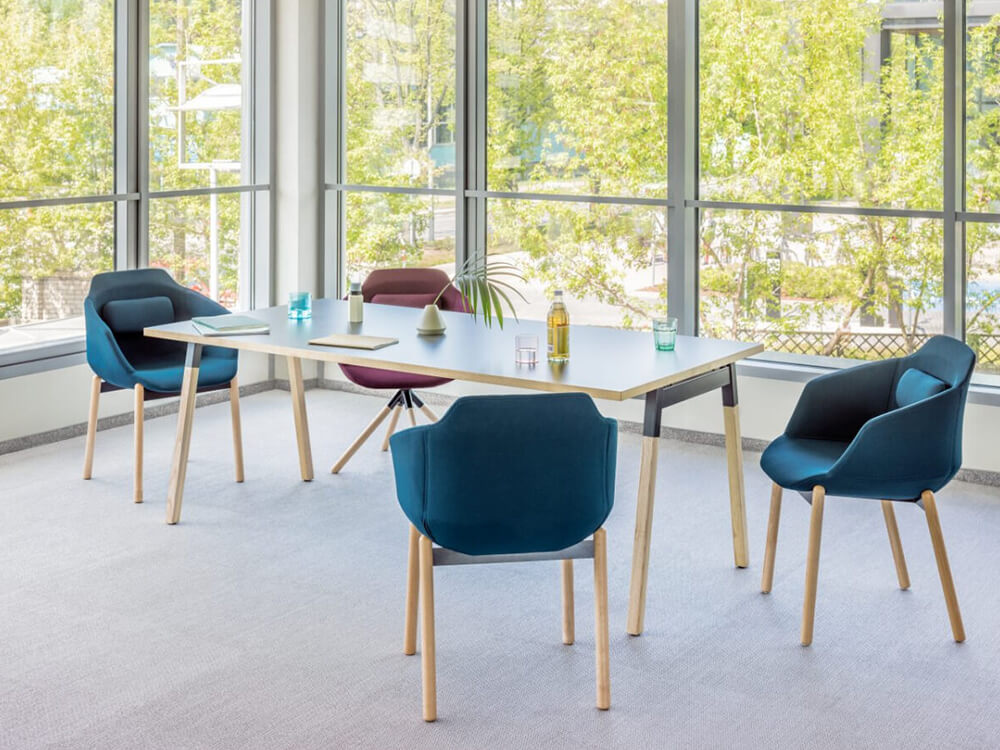
To make the calculations easier, it’s recommended to have 80 cm per person, which will help you pick the right dimensions for a meeting room table. For example, if you need four chairs in the meeting room, then you should be looking at a table of 200 cm x 100 cm. For example, this rectangular-shaped meeting table is perfect for comfortably sitting four people with its 200 x 100 cm dimensions that will allow the proper space requirements for both guests and employees.
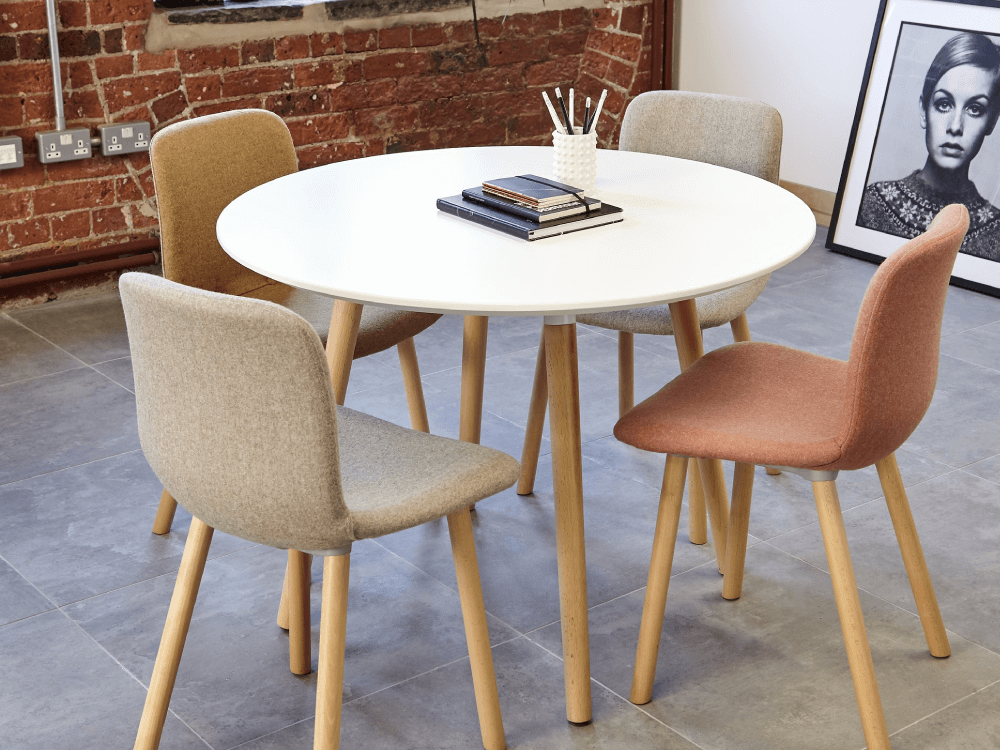
You should also consider a workspace that easily allows people in the meeting room to engage with each other. For example, a round table such as this white veneer table may be better for smaller groups, whereas a rectangular table might be better for presenting to larger groups.
Do a last check for workflow and storage
While these may not be legal requirements, creating a good workflow in an office will help efficiency. Workflow is essentially the sequence of steps that it takes to complete a task, and designing these sequences so they’re all in order and don’t require people to double back on themselves will lower the amount of time it takes to get work done, while also lowering the risk of things getting mixed up.
Creating a good workflow for employees can look different for each business. Below we’ve included some ideas for increasing workflow in an office.
- Making the walk from the doorway to desks easily accessible and not hard to navigate.
- Creating an easy path to a seating area for visitors.
- Having filing cabinets next to printers and having the printers near the desks.
- Having things that are used more frequently near the employees and having less frequently used objects further away.
Create a productive and efficient workspace with Auraa Design
Designing an office space is a challenging task with many requirements to consider when creating an accessible, productive and efficient workspace. If you’re struggling to find the right furniture to help you make the most of the space you’re working with, then we can help. Here at Auraa Design, we offer a wide range of high-quality bespoke office furniture with free office space planning service so you can enjoy an easy office layout experience.